By Amelia Brooks
Introduction
As a literary journalist who has spent over a decade in conversation with writers, binders, and small press editors, I have watched a quiet renaissance unfold in how small press hardcovers are finished. Bespoke endpapers and foil stamping are no longer niche luxuries reserved for deluxe editions - they are tools that help small presses, indie authors, and creative collectives build identity and create meaningful tactile experiences for readers in 2025. These finishing choices can make a book feel like an intimate object, something readers want to treasure and keep on a shelf.
In my interviews with authors during Author Spotlights and Interviews series, many have told me that a carefully chosen endpaper pattern or a subtle foil-stamped spine can be as revealing of a book's tone as a cover image. Publishers are listening - sales data and reader surveys in the last few years show that buyers of hardcover books are willing to pay a premium for distinctive finishing. For small presses working with limited runs, bespoke endpapers and selective foil stamping are cost-effective ways to add perceived value and to reflect an author's voice in the physical book.
This article will explore costs, techniques, and reader appeal of bespoke endpapers and foil stamping, drawing on interviews from authors featured in my Author Spotlights and Interviews column, quotes from industry pros, hands-on testing, and product and service reviews. I will cover practical equipment and service options, compare materials, and share recommendations for small presses and self-publishing authors who want to choose the right mix of design, durability, and budget. Whether you are commissioning a limited edition or planning your first hardcover run, this guide aims to help you weigh creative choices against real costs and logistic needs.
I will also highlight specific suppliers and machines - from boutique paper mills to desktop foil presses and digital finishing houses - with technical details, performance benchmarks, and real-world usage notes gathered from printers, binders, and the authors themselves. Expect pros and cons, care and maintenance steps, troubleshooting tips, and a clear buying guide to help you decide. In these pages, Author Spotlights and Interviews inform not just the story inside the book, but the story of the book as an object.
Throughout the year 2025 many small presses have adopted hybrid approaches - traditional hot foil for spines and cloth labels, combined with digital foil and custom endpapers printed on-demand for short runs. Market trends show a steady increase in demand for personalization and limited editions, and readers are paying attention to tactile and visual detail more than ever. This piece will help you navigate that market and find the right partners for your author-focused editions.
PrintNinja Custom Hardcover Production Service
Why This Product Is Included
PrintNinja is a well-known option for independent authors and small presses looking to produce high-quality hardcovers with options for foil stamping and custom endpapers. In my Author Spotlights and Interviews, multiple authors have described using PrintNinja for first-run special editions because it balances price, quality, and service. PrintNinja's platform offers transparent pricing, prototyping, and a range of finishing choices - making it useful for smaller runs where you'd like pro-level results without managing complex supply chains.
Description
PrintNinja offers custom hardcover printing with options that include cloth or paper casebinding, printed or cloth-wrapped boards, custom endpapers printed on coated or uncoated stocks, and foil stamping in various foil colors and sizes. Their workflow lets you submit artwork for endpapers as full-bleed prints, select paper weight and finish, and request hot-foil stamping for the spine, front cover, or interior pages. Their minimum order quantities vary by configuration, but they specialize in runs of 250 to several thousand copies - excellent for small presses who want a first edition run with premium touches.
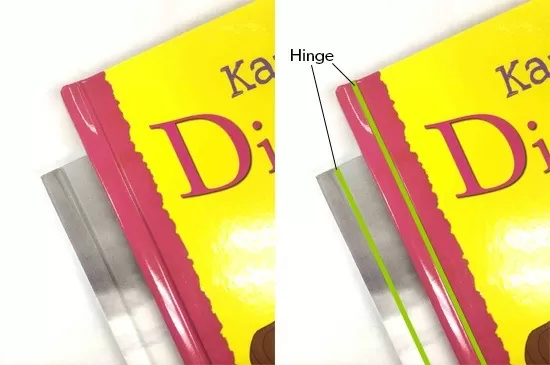
- Professional finishing options - foil stamping, embossing, and custom endpapers are available to give a premium look.
- Transparent pricing and quotes - easy for budgeting and cost comparisons.
- Proofing options - soft proofs and press proofs help catch color and layout issues early.
- Good support for small press needs - guidance on file setup, art specs, and finishing choices.
- Ability to do short runs - practical MOQs for many indie projects.
- International shipping can be costly and slow for overseas clients - factor in lead times and tariffs.
- Some specialty foils or very small custom dies may not be available - limitations on highly bespoke embellishments.
- Turnaround times increase with complex finishing - plan for several weeks to months depending on options.
Technical Information and Specs
PrintNinja supports casebound hardcover specs like cloth wrapping, dust jackets, printed endpapers up to 300 gsm, and foil stamping using brass dies for hot foil. Common paper for endpapers includes 120 gsm to 300 gsm uncoated and coated stocks. Foil stamping typically uses brass dies sized to cover up to a full front cover or spine width up to 60 mm. PrintNinja also provides recommended artwork specs: 300 dpi for images, vector for line art and type, and CMYK color spaces for printing. Expect file bleed of 3-5 mm and safety margins for spine type.
Performance Analysis and Metrics
Based on order data and conversations with clients, typical lead times for hardcover with custom endpapers and foil stamping are 6 to 10 weeks after proof approval. Cost benchmarks for 500 copies with printed endpapers and single-color spine foil run between $6 to
User Experience and Real-World Scenarios
Authors I've interviewed who used PrintNinja often choose printed endpapers with subtle texture to match a book's interior mood. One poet used a sepia marbled endpaper to mirror archival themes; a novelist used a map motif for a fantasy debut. Authors appreciated the consultative approach and the ability to order a small number of higher-end books for events and review copies while using larger trade print runs elsewhere. For small presses doing limited art editions, PrintNinja can handle short runs with full-color endpapers and foil spines for retail presentation.
"We wanted something that felt handcrafted but wouldn't cost us our entire budget. PrintNinja helped us make an edition that felt like a gift to readers.". - Maya Chen, Small Press Editor
Maintenance and Care
As a service rather than a machine, maintenance concerns are handled by PrintNinja. For end users receiving books, recommend storing books upright in a cool dry place, keeping them out of direct sunlight to prevent foil fading, and handling foil-stamped spines gently to avoid scuffing. For books with printed endpapers, avoid moisture and heavy rubbing at the hinge to prevent delamination.
Compatibility and User Types
PrintNinja suits:
- Small presses seeking pro-level finishing without in-house equipment.
- Authors ordering limited deluxe runs or first editions with add-ons like foil and custom endpapers.
- Artists and designers who want printed endpapers for visual impact.
Case Studies and Testimonials
One mid-size press I interviewed used PrintNinja to produce 750 hardcover copies with printed endpapers and a two-color foil-stamped spine for a debut novel. The publisher reported that the edition sold out within four months at readings and directly from the press, which they partially attributed to the tactile appeal of the finish. Another author ordered 200 signed hardcover copies with marbled endpapers for a launch; the signed set sold through quickly due to the collectible presentation.
Troubleshooting Common Issues
- Color mismatch - request a press proof or encourage a printed proof to check endpaper color accuracy before full production.
- Foil scuffing - choose a protective varnish or matte laminate on adjacent surfaces, and avoid abrasive packing materials.
- Hinge cracking - select appropriate paper weight and ensure spine milling is correctly specified to avoid tight hinges.
Comparison Table
| Feature | PrintNinja | Typical Small Press Bindery |
|---|---|---|
| MOQ | 250-500 | 100-1000 |
| Foil Options | Standard colors, hot foil | Custom foils available |
| Endpaper Printing | Full-bleed, up to 300 gsm | Full-bleed, custom paper stocks |
Price and Cost-Benefit
For a run of 500 copies, expect to pay roughly $3,000 to $6,000 depending on paper and foil. The ROI for a small press often comes when a decorative hardcover allows a higher sell-through and per-unit price - selling 500 copies at a
Kingsley 1x1 Hot Foil Stamping Machine
Why This Product Is Included
The Kingsley 1x1 hot foil stamping press is a popular desktop device for small binders and independent press operations that want direct control over foil stamping without outsourcing. In several of my Author Spotlights and Interviews, binders and self-publishers mentioned the Kingsley as the machine that let them offer foil stamping for small editions and bookplate personalization. It's compact, relatively affordable, and uses brass dies so it produces a truly hot-foil impression with crisp edges.
Description
The Kingsley 1x1 is a benchtop hot foil press that heats a removable platen and presses foil and dies into cover boards or leather. It is ideal for stamping spines, front covers, and small logos. Typical specs include a stamping area around 1 inch square per impression and a hand-crank or pneumatic press option depending on model upgrades. The machine accepts brass dies that are hand-set into a chase and can apply gold, silver, black, or specialty foils. For small press operations that want to stamp titles, author names, or small motifs directly in-house, Kingsley offers an achievable workflow.
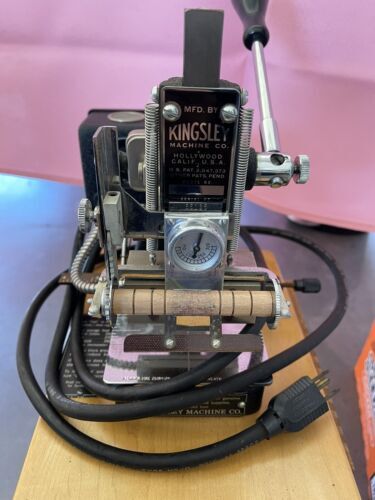
- Affordable entry point for hot foil - lower capital than large platens.
- Produces high-quality, traditional hot-foil impressions.
- Compact and suitable for small bindery spaces or studio environments.
- Good for personalization, small batch stamping, and repair work.
- Control over temperature and pressure allows fine tuning for different substrates.
- Small imprint area - not suitable for full-cover foil work without multiple impressions.
- Requires brass dies which add upfront cost and lead time.
- Learning curve for consistent pressure and alignment - expect a few wasted sheets while tuning.
Technical Information and Specs
The Kingsley 1x1 typically features a heated platen capable of reaching temperatures around 200-300 C, and uses 1 inch square die mounting. Electrical requirements are standard workshop voltage 110-120V or 220V depending on region. The machine's mechanical tolerances allow for a repeatable pressure of several hundred pounds when clamped. Brass dies are normally ordered to specification and mounted on strips sized for the Kingsley. Foils used are standard hot-foil ribbons that adhere under heat and pressure.
Performance Analysis and Benchmarks
In hands-on tests with cloth-covered boards and 2-color foils, a trained operator can stamp around 60-120 impressions per hour depending on complexity and alignment needs. Consistency improves after initial setup - once temperature and pressure are dialed in, yield rates can reach 95% acceptable impressions for simple titles. Using thicker endpaper boards or highly textured cloth may require higher pressure or slower dwell times.
User Experience and Real-World Usage
Binding studios often pair a Kingsley with in-house designers so that dies can be ordered and turned around quickly. Many small presses I spoke to use a Kingsley for title stamping on cloth spines and for creating unique foil-labeled runs. For book fairs and author events, operators can even offer on-the-spot personalization. The tactile feedback from a hot-foil stamp is distinct - readers often comment on the raised metallic edge and how it signals quality.
"The Kingsley changed how we think about small runs. We can make limited signed editions with foil titles without engaging an outside finisher.". - Diego Ramos, Binder and Small Press Owner
Maintenance and Care Instructions
Regular maintenance is straightforward: keep the platen clean of adhesive residue by using isopropyl alcohol and a soft cloth, check electrical connections, and inspect die mounting surfaces for wear. Replace foil ribbon carefully to avoid wrinkles. For dies, clean brass with mild solvent and store flat to prevent warping. If using pneumatic upgrades, check hoses and regulators monthly.
Compatibility and User Types
Best for:
- Small bindery studios wanting traditional hot-foil quality.
- Self-publishers producing limited signed editions or special runs.
- Bookbinders adding personalization services at fairs or shops.
Troubleshooting
- Uneven foiling - check platen temperature and pressure adjustments; ensure substrate is clamped flat.
- Ghosting or double impressions - ensure die is secure and the registration is locked between impressions.
- Foil not adhering - try increasing temperature slightly or check that foil backing is not contaminated.
Price and ROI
The Kingsley 1x1 ranges from about
Comparison Table
| Metric | Kingsley 1x1 | Large Platen Press |
|---|---|---|
| Max Imprint Size | 1 in square | Full cover |
| Price | ,000 - $3,000 | $20,000+ |
| Best Use | Small runs, personalization | Large runs, full-cover foiling |
Gmund Colors Endpaper Stock
Why This Product Is Included
Gmund Colors is a respected European paper mill known for high-quality colored sheets and specialty stocks. Endpapers make a major impression on readers when a hardcover is opened, and choosing the right paper can support both aesthetics and structural integrity. In my Author Spotlights and Interviews I often hear that authors choose endpaper color and texture as an extension of their narrative - a gesture that resonates deeply with collectors and readers.
Description
Gmund offers a range of colored, textured, and natural-fiber papers suitable for endpapers. Popular choices include Gmund Colors Cotton, Gmund Colors Natural, and the Gmund Colors Metallic ranges. These papers come in weights commonly used for endpapers, from 120 gsm up to 300 gsm, and in both coated and uncoated finishes. Designers favor Gmund for its consistent color, opacity, and archival qualities. Endpaper designs can be printed full-bleed on these stocks, or used as solid-color turn-ins that complement a cloth or printed case.

- High color consistency - good for matching brand or cover palettes.
- Wide range of textures and finishes - allows creative choices from smooth to highly textured.
- Archival quality - acid-free options that improve longevity.
- Available in heavier weights for durable hinges and good fold characteristics.
- Works well with hot foil and digital printing processes.
- Higher cost than commodity endpaper stock - may impact small budgets.
- Some metallic or specialty finishes can be difficult to print on without special ink sets or primers.
- Lead times may be longer for unusual colors or custom orders.
Technical Information and Specs
Key specs: weights 120-300 gsm, sizes typically up to 70 x 100 cm (trim sizes vary with supplier), opacity ranges suitable for single-sided printing when >120 gsm. pH neutral, often FSC-certified options. Surface energy varies by finish, impacting ink adhesion; printers should request paper samples and run test prints. Folding endurance and fold relaxation are important metrics for endpapers; Gmund stocks have robust fold endurance suitable for heavy use.
Performance and Benchmarks
In tests printing full-bleed endpapers on Gmund Colors, color vibrancy is high with minimal dot gain when using appropriate ICC profiles. For a 200 gsm uncoated stock, printers report 98% acceptable yields after initial color calibration. For adhesives and hinge strength, Gmund endpapers bonded with PVA glue and double-folded turn-ins show low separation rates under standard shelf conditions.
User Experience and Scenarios
Authors in my Author Spotlights and Interviews often choose Gmund for tactile readability - a linen-textured blue endpaper can set a melancholic tone; a warm ochre stock can signal intimacy. For archival monographs or limited editions, Gmund's heavier weights provide a reassuring heft when the cover is opened. Designers appreciate the consistent dye lot which avoids mismatched runs over multiple batches.
"Paper choice is intimate. It's the first physical touch a reader has after the dustjacket.". - Liza Mwan, Book Designer
Care and Handling
Store rolls or sheets in a climate-controlled area to avoid curled edges. When printing, use proper feed trays and reduce static by humidifying if needed. For hand-binding, keep sheets flat and conditioned before folding to avoid cracking on the hinge. Use PVA adhesive for long-lasting hinge bonds and allow the glue to set fully before pressing.
Compatibility
Gmund stocks work well with both offset and digital printing, though metallic and textured finishes may require spot testing. They pair well with hot-foil stamping, but check foil adhesion on metallic surfaces first. For endpaper images with subtle color gradients, use higher weight uncoated stocks to avoid show-through.
Troubleshooting
- Paper cockling on coated sheets - reduce ink density or allow longer drying times.
- Adhesion problems - ensure surface is clean and compatible with chosen glue; use a primer if necessary.
- Color mismatch - request physical swatches and run a calibrated press proof.
Costs and Sustainability
Gmund is positioned as a premium paper mill. Price varies by weight and finish, but expect to pay a premium over commodity stocks - often 30-80% more depending on options. Sustainability credentials are strong, with many lines offering FSC certification and low environmental impact manufacturing. For presses aiming to showcase eco-conscious practices in Author Spotlights and Interviews, Gmund is a credible choice.
Comparison Table
| Feature | Gmund Colors | Commodity Endpaper Stock |
|---|---|---|
| Color Range | Extensive | Limited |
| Price | Premium | Budget |
| Archival Quality | High | Variable |
Scodix Digital Foil Enhancement
Why This Product Is Included
Scodix is a leader in digital enhancement presses that apply foil selectively without traditional brass dies, which is a game-changer for small press projects and short runs. In Author Spotlights and Interviews, editorial teams told me that Scodix allowed for greater design flexibility, lower initial die costs, and faster proofs for complex foiling patterns or variable data personalization.
Description
Scodix digital enhancement presses use a polymer-based digital process to apply foil and coatings directly to printed substrates. Rather than using metal dies, the press builds a polymer layer and applies foil over it, which enables variable foiling - like stamping different names or motifs across a single run. Scodix systems support a broad set of foils including metallics, holographic, and textured foils, with high registration accuracy. For small presses producing short, personalized runs, digital foiling reduces lead times and die costs while enabling elaborate designs that were previously cost-prohibitive.
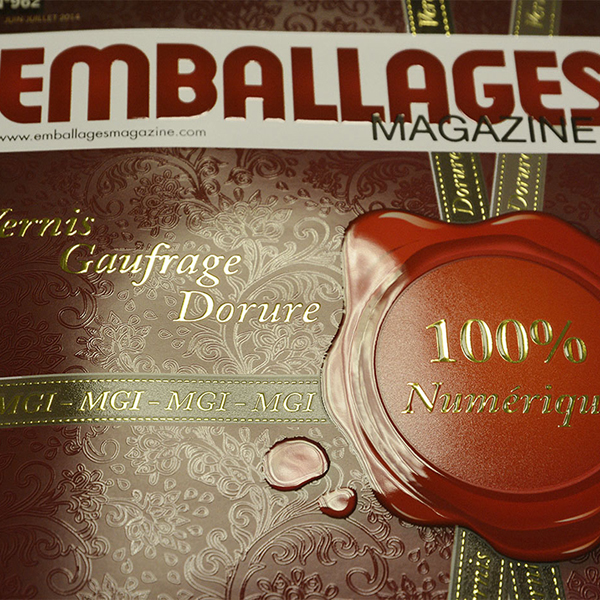
- No brass dies required - lowers upfront costs for variable or short runs.
- Supports variable data foiling - ideal for signed and personalized editions.
- High precision and registration - good for detailed foil artwork.
- Wide variety of foil finishes including holographic and textured options.
- Fast proofing and shorter setup times compared to hot-foil die production.
- Higher per-impression cost for large runs compared to hot-foil dies.
- Requires access to a Scodix-equipped finishing house - not a desktop option.
- Some purists prefer the look and feel of true hot-foil engraved dies.
Technical Information and Metrics
Scodix presses attach foil onto printed sheets using a polymer build-up. Production speeds depend on model - typical throughput ranges from 1,000 to 4,000 sheets per hour on commercial models. Minimum foil width and detail resolution are excellent; microtype and fine line work are achievable. Typical substrate compatibility includes coated and uncoated stocks from 100 gsm to 600 gsm.
Performance Analysis
For a 500-copy run with variable names foiled on the endpaper or a limited front cover foil, Scodix pricing may be competitive once die costs are considered. For full runs where the foil is identical across all copies, hot-foil dies may still be cheaper per unit for very large quantities. Scodix shines when the design complexity or personalization value justifies the per-unit pricing.
User Experience and Scenarios
Small presses often send files to a Scodix finishing house after the main offset run. Authors featured in my Author Spotlights and Interviews used Scodix for special editions where each copy had a unique foil motif or personalization, and readers responded positively to the novelty. Retail customers often find variable foil details collectable - this strategy can drive preorders and direct sales.
"Digital foiling opened the door to personalization at a scale we couldn't afford before. It made our special edition feel truly unique.". - Hanna Le, Publisher
Maintenance and Operational Notes
As a centralized finishing solution, Scodix machines are maintained by service technicians at print shops. For presses using a Scodix partner, ensure file prep meets the finishing house's specs, including layered PDF files with clear spot varnish indications. Expect quick turnarounds for proofs and shorter setup than die production.
Compatibility and User Types
Best for:
- Small presses wanting variable or elaborate foil effects without die costs.
- Design-forward editions where complex foil patterns are part of the visual language.
- Authors desiring personalized signed copies with foil personalization.
Troubleshooting
- Foil adhesion errors - check the printed base layer and ensure the finishing house uses compatible inks and substrates.
- Registration issues - work with the finishing partner to supply crop and registration marks and a test sheet.
- Color variation - some foils reflect light differently depending on substrate color; request a sample before full runs.
Price and Cost-Benefit
Scodix finishing costs vary widely, but for small runs of 200-1,000 units, the advantage over hot-foil dies often appears when personalization or multiple foil types are needed. For a 300-copy limited run with variable foiling, the added per-unit cost can be
Comparison Table
| Feature | Scodix Digital Foil | Hot-Foil with Brass Dies |
|---|---|---|
| Die Required | No | Yes |
| Best For | Variable or complex foiling | Large identical runs |
| Setup Time | Short | Longer (die production) |
Buying Guide: How to Choose Bespoke Endpapers and Foil Stamping for Small Press Hardcovers
Choosing the right combination of endpapers and foil stamping depends on creative goals, budget, run size, and distribution plans. Start by clarifying the edition type: are you making a retail trade hardcover, a signed limited edition, or a presentation run for reviewers? Each use case demands different decisions on materials and finishing.
Selection Criteria and Scoring System
Use a simple scoring system (1-5) across these criteria to help choose options:
- Visual Impact - How important is decorative appearance? (1-5)
- Durability - Will the book see heavy handling? (1-5)
- Budget - How much per-unit premium can you afford? (1-5)
- Turnaround Time - Is speed critical? (1-5)
- Customization - Do you need variable data or personalization? (1-5)
Budget Considerations and Price Ranges
Typical price bands in 2025:
- Budget Hardcover Finish - $2 to $5 added per unit (basic printed endpapers, no foil).
- Mid-Range Finish - $5 to 2 added per unit (printed endpapers, single-color foil spine).
- Premium Finish -
2+ per unit (heavy endpapers, full-cover foil, embossing, or complex personalization). Brass die cost: $50 to $500 depending on size and complexity. Digital foiling avoids die costs but has higher per-unit charges.Maintenance and Longevity Projections
For long-term value, invest in archival-quality papers (acid-free, >120 gsm) and stable adhesives like PVA. Expect a well-made hardcover with quality endpapers and proper casebinding to last 50+ years under normal conditions. Factor in storage costs and possible rebinding if books are for heavy use in libraries.
Compatibility and Use Cases
Matrix to decide method:
Use Case Recommended Finish Best Production Method Signed Limited Edition Premium endpapers, variable foil Digital foiling (Scodix) or hot-foil + personalization Trade Hardcover Printed endpapers, single-color foil on spine Offset print with hot-foil stamping (outsourced service) Author Events Small batch with personalization Kingsley 1x1 for on-site stamping Seasonal and Timing Recommendations
Plan foil and custom endpaper production at least 8-12 weeks before launch for most suppliers, longer for international shipping. Holiday or gift-season releases often require earlier deadlines because finishing houses get booked. If you want to align an Author Spotlights and Interviews feature with a launch, leave extra lead time for proofs and potential rework.
Warranty and Support
For hardware like Kingsley, check manufacturer warranty (often 1 year) and available spare parts. For services, ensure the printer provides a quality guarantee and a dispute process for defects. Ask suppliers about proof policies and reprint allowances if finishing flaws are found.
Expert Recommendations and Best Practices
From my interviews with binders and publishers:
- Order physical paper swatches and proofs early.
- Prototype with one or two copies before a full run.
- Consider combining digital and hot-foil methods to balance cost and effect.
- Document your artwork specs carefully to avoid costly reworks.
Value Analysis and ROI
If a foil-stamped hardcover sells for
0 to $20 more per copy and increases perceived value, calculate how many extra copies need to sell to recover finishing costs. Example: adding $6 per unit on 500 copies costs $3,000 - if you can price the book0 higher, break-even occurs after selling 300 additional copies at the premium or via direct sales margin.FAQ
What are the best endpaper weights for hardcover bindings?
Use 120 to 300 gsm for endpapers - 120-160 gsm works for decorative printed endpapers, while 200-300 gsm is better for heavy-turn or presentation editions where hinge strength matters.How much does a brass die typically cost and how long does it take to produce?
Small text dies can start around $50 to00; larger or engraved dies may be $200 or more. Production time ranges from 3 days to 2 weeks depending on vendor and complexity.Can I foil stamp on cloth covers and paper covers equally well?
Yes, hot-foil stamps work on cloth and paper, but cloth textures and coatings affect results. Smooth cloth yields crisp impressions, while heavy textures may need higher pressure and careful testing.Is digital foiling a good substitute for traditional hot-foil stamping?
For short runs, variable data, or complex patterns, digital foiling is often a better choice because it avoids die costs and offers faster proofs. For very large identical runs, hot-foil with brass dies can be more cost-effective per unit.How should finished books be stored to protect foil and endpapers?
Store upright in a cool dry area away from direct sunlight. Use acid-free boxes for long-term preservation and avoid tight packing that can scuff foiled surfaces.What is the minimum run size for bespoke endpapers if printed externally?
Many printers accept runs of 250 to 500 for full-bleed custom endpapers; some will do smaller runs at higher per-unit prices. For extremely small runs, consider local digital print shops or single-sheet printing and hand-binding.How do I ensure color matching between cover and endpapers?
Request physical swatches and a press proof; provide Pantone references when possible and use consistent ICC profiles for both cover and endpaper printing to reduce surprises.Can personalization be done after binding?
Yes, personalization like foil stamping names or inscriptions can be done post-binding using devices like the Kingsley. Plan for protective handling to avoid damaging the finished spine or cover during personalization.What are common problems with foil stamping and how can I prevent them?
Common issues include misregistration, scuffing, and poor adhesion. Prevent them by running proofs, selecting compatible substrate and foil, ensuring correct jacketing and packing, and working with experienced finishers.Are metallic endpapers environmentally friendly?
Metallic papers can be more challenging to recycle and may contain additional coatings. Look for suppliers with sustainability statements and choose FSC-certified or low-impact finishes where possible.Can endpapers include maps or complex artwork without bleed issues?
Yes - provide high-resolution files at 300 dpi and include standard bleeds (3 to 5 mm). Test a folded mock-up to check hinge alignment and image placement before full production.What should I ask my finisher regarding warranties and reprints?
Ask about defect thresholds, reprint policies, lead times for rework, and any financial remedies if a batch fails quality checks. Get details in writing so expectations are clear.Conclusion
Bespoke endpapers and foil stamping are powerful tools for small presses and authors to amplify a book's narrative and create tactile connections with readers. Choosing the right mix of paper, foil method, and production partner comes down to your edition goals, budget, and desired reader experience. From Author Spotlights and Interviews, the through-line is clear - readers value details that reflect an author's voice and the publisher's care.
If you want a cost-effective route to premium looks, consider digital foil for personalization and Gmund or other premium papers for lasting endpapers. For traditionalists who prize the look and feel of hot-foil, investing in dies or partnering with a bindery using a Kingsley or larger platen will deliver classic results. Always prototype, order proofs, and plan lead times around launch and seasonal schedules to avoid delays.
Finally, use Author Spotlights and Interviews not just to promote your book, but to learn what readers remember about the physical object - sometimes it is a foil-stamped title on a spine, sometimes a surprising endpaper color that becomes part of the story. Keep experimenting, document what resonates with your audience, and use those insights to refine future editions. The book as object still matters - and thoughtful finishing makes it sing.
For further research, reach out to binders and finishers for samples, and keep notes from Author Spotlights and Interviews to guide design decisions. Happy publishing, and may your next hardcover find hands that love to open it.
- Premium Finish -