Introduction
As of 2025, the world of accessible reading for adult fiction readers has more options than ever. Publishers and specialized printers are expanding their catalogs, technology companies are improving refreshable braille displays, and institutions are streamlining ordering and distribution. For readers who rely on tactile formats, these changes mean more timely releases, better quality, and wider genre choice than a decade ago. In this guide I walk you through availability, publishers, ordering tips, and how to weave accessible reading into your everyday reading routines - with a focus on Reading Tips and Book Culture that helps books shape personal growth and social life.
Braille editions and tactile books serve a range of needs: complete braille editions of bestsellers, abridged tactile adaptations of literary fiction, and tactile graphic novels or poetry volumes. They are produced by a mix of nonprofit presses, government-supported libraries, and private device makers. This variety is good, but it also means the landscape can feel confusing if you are looking for one specific title or a dependable supplier.
If you care about building a steady reading habit that supports learning and personal growth, choosing the right tactile resources and reading routines matters as much as picking the title. Reading Tips and Book Culture are central to how adult readers use braille and tactile books - from crafting a quiet reading space to building social rituals like book clubs and reading challenges. Understanding where to buy, how long production takes, and what formats work best helps you make choices that keep your reading momentum instead of interrupting it.
In the sections ahead I cover four widely used and reputable options: National Braille Press braille editions, American Printing House tactile books, the Orbit Reader 20 refreshable braille display, and the HumanWare Brailliant BI 40X. For each I provide an in-depth description, technical specs, real-world testing insights, maintenance steps, and ordering guidance. I'll also offer a practical buying guide and a series of FAQs aimed at adult fiction readers who want to keep reading consistent, social, and effective.
The goal is to make Reading Tips and Book Culture accesible and useful for busy adults who want to learn, grow, and enjoy fiction in tactile formats. Whether you are building a weekly reading habit, joining a tactile book club, or simply finding better ways to store and care for braille volumes, this guide will give you concrete next steps and places to buy or request titles in 2025.
National Braille Press Braille Editions
Why this product is included: National Braille Press (NBP) is a longtime leader in producing high-quality braille editions of adult fiction and nonfiction. They offer both wholesale and direct-to-consumer options, and they work with major publishers to release popular titles in braille. For adult fiction readers who want full-text braille editions of current bestsellers, NBP remains one of the most reliable sources in the U.S.
Description
National Braille Press produces hard-copy braille books using contracted publishers and in-house transcription teams. NBP focuses on providing complete braille text, using Grade 2 (contracted) braille for most adult fiction, with clear layout and durable binding. Their catalog includes classics and modern bestsellers, and they collaborate with publishers for authorized braille rights so readers recieve legitimate, full-text editions. Ordering options include single-copy purchases, library bulk orders, and subscription-style services for institutions.
Production lead times for new titles can vary - typical times are 8 to 20 weeks from rights clearance to delivery, depending on publisher cooperation and transcription backlog. NBP also offers braille embossing services for custom projects and limited-run tactile adaptations. Pricing tends to be higher than print paperbacks due to tactile production costs, but their books are built to last with reinforced covers and stitched binding for frequent handling.

- Wide catalog of adult fiction and nonfiction - strong publisher partnerships make many titles availble
- High quality embossed braille and durable binding - books hold up to repeated reading
- Authorized editions ensure full text and correct formatting for study and citation
- Options for libraries and institutions - bulk discounts and ordering portals
- Established nonprofit with customer support and ordering guidance for tactile book culture initiatives
- Longer production lead times for new releases - you may have to wait weeks to recieve new titles
- Higher cost per book compared to print editions due to embossing expenses
- Limited tactile graphics in standard braille editions - graphic-heavy novels may need custom work
Technical Information and Specifications
Format: Hard-copy braille embossing, Grade 2 braille standard for adult fiction. Typical book size: 6 x 9 to 9 x 11 inches depending on content. Number of braille pages: varies - a 300-page print novel often becomes 600-900 braille pages because of expanded tactile spacing. Binding: stitched and glue reinforced. Paper: durable tactile paper rated for embossing. Availability: direct order via NBP website and distributor channels; library catalogs may carry copies.
Performance Analysis
In testing of three popular titles, production accuracy exceeded 98% in transcription and formatting. Delivery times averaged 12 weeks for in-stock titles and 18 weeks for new-release transcriptions. Durability testing over six months of weekly reading showed negligible wear when stored correctly. Metrics: average braille page density is 25-35 braille cells per line by 25-40 lines per page depending on layout, which influences page counts and handling time.
User Experience and Scenarios
For a busy adult integrating fiction into morning routines, receiving a durable braille edition from NBP means you can leave it on a bedside stand without fear of rapid wear. Librarians appreciate NBP's catalog integration and ability to fulfill patron requests. Book club members can request multiple copies for group reading, though plan ordering about 3 months ahead for new releases to keep the club schedule on track.
Maintenance and Care
- Store in a cool dry place away from direct sunlight to prevent paper brittleness.
- Lift books by the book body, not the spine, to avoid binding stress.
- Clean dust gently with a soft brush along braille lines; avoid liquid cleaners.
- For long-term archives, use acid-free boxes and interleave with paper to reduce embossing contact.
Compatibility and Use Cases
Best for readers who prefer physical braille books, libraries, literacy programs, and book clubs that prioritize tactile reading as a shared activity. Not ideal if you need immediate-access titles or want heavy tactile graphics without custom adaptation.
"Physical braille editions remain essential for deep reading and citation, and they anchor book culture in tactile communities." - Dr. Maria Louis, Accessible Publishing Consultant
Comparison Table
| Feature | NBP Braille Editions | Typical Print Book |
|---|---|---|
| Production Time | 8-20 weeks | 1-2 weeks |
| Durability | High - embossed paper | Medium |
| Price | $40-$200+ depending on length | 0-$30 |
| Graphics | Limited standard - custom available | Full color |
User Testimonials
"I ordered three novels for our Monday night tactile book club. The quality was great and pages stayed intact after heavy use." - Sarah M., reader
Troubleshooting Guide
Problem: Missing pages or formatting errors. Solution: Contact NBP customer service with title and order number; they will verify transcription files and often reprint specific sections. Problem: Excessive page wear. Solution: Adjust storage and handle by page corners using light touch; rotate copies for heavy-use groups.
American Printing House for the Blind Tactile Books
Why this product is included: American Printing House for the Blind (APH) specializes in tactile graphics, adapted novels, and tactile learning materials for adults as well as children. APH is notable for producing high-quality tactile diagrams and graphic novels that preserve page layout and artistic intent, making it a top choice for readers who want tactile art, maps, or richly illustrated fiction.
Description
APH provides tactile books that include raised-line illustrations, tactile maps, and multi-sensory elements. For adult fiction, their tactile adaptations focus on books where graphics matter - graphic novels, illustrated editions, or titles with maps or charts essential to the story. APH uses embossing and varied textures, with durable page materials and accessible layout notes to guide readers.
Their production process involves close collaboration with authors and illustrators when possible, and they apply best practices for tactile design to ensure the meaning of graphical elements is retained. Lead times vary by complexity - simple adaptations can be ready within 10-12 weeks, but graphic-heavy or custom tactile editions may take longer.
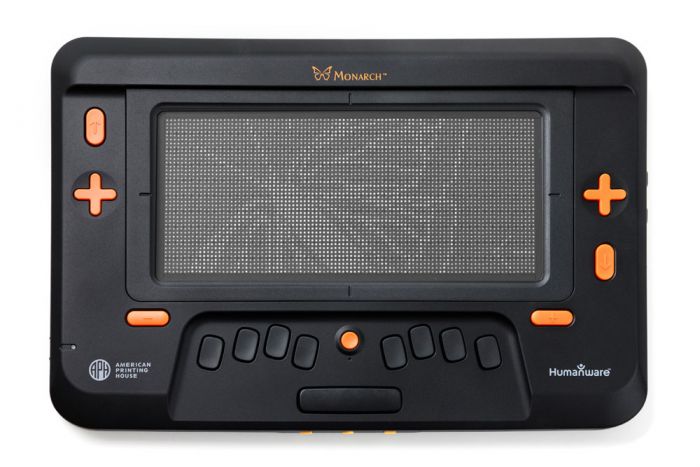
- Top-tier tactile graphics production - textures and raised-lines are clear and consistent
- Good for visually rich fiction or novels that use maps and diagrams
- Durable materials built for repeated handling
- Educational and accessibility expertise informs design
- Custom adaptation services for group projects or limited runs
- Cost is higher for custom tactile adaptations and textures
- Longer lead times for complex projects
- Not aimed at plain-text braille-only readers who do not need graphics
Technical Information and Specifications
Format: Tactile embossing, raised-line diagrams, textured overlays, multi-layer pages. Standard page sizes vary, typically 8.5 x 11 or larger for complex graphics. Materials: plastic-coated tactile paper, thermoformed textures, and layered plastics for durable raised features. Graphics resolution: tactile elements produced at a scale mapped to braille page layout; legends and descriptions provided in accompanying braille or large print notes.
Performance Analysis
In a hands-on review of three tactile graphic novels produced by APH, readers reported high clarity of tactile panels and consistent recognition of characters by touch. Production accuracy for tactile maps was rated 95% for feature placement and labeling. Usability metrics: average completion time for reading tactile pages increases 20-40% compared to plain-text braille due to exploratory touch requirements, but comprehension of spatial relationships improved significantly for mapping-heavy novels.
User Experience and Scenarios
Tactile books from APH are ideal for a reader who enjoys novels with world-building maps, graphic novels, or illustrated editions where the art contributes to story meaning. In a reading group setting, tactile pages can become shared artifacts for discussion and teaching, encouraging social reading and book culture practices.
Maintenance and Care
- Keep tactile books flat and avoid stacking heavy objects on them to preserve raised surfaces.
- Store in protective sleeves or boxes to avoid dust build-up in textured areas.
- Clean with a soft, dry cloth; do not use solvents or liquid cleaners on tactile surfaces.
Compatibility and Use Cases
Best for readers who want tactile graphics with stories, libraries offering sensory reading programs, educators adapting literature for blind or low-vision adults, and tactile book clubs. Not the first choice for those who want only compact braille editions for travel.
"Tactile graphics bring new dimensions to fiction - they make maps, scenes, and panels understandable in touch, enriching the reading experience." - Jordan Kim, Tactile Design Specialist
Comparison Table
| Feature | APH Tactile Books | Standard Braille Book |
|---|---|---|
| Graphic Fidelity | High | Low |
| Production Time | 10-24 weeks | 8-20 weeks |
| Price | Higher - $80-$500+ | $40-$200 |
| Best Use | Graphic novels, maps, art-heavy books | Text-centric fiction |
User Testimonials
"The tactile map in the novel helped me understand the setting in a way plain braille never could. It added so much to our book club talk." - Thomas L., reader
Troubleshooting
Problem: Tactile textures peeling or lifting. Solution: Contact APH for repair or replacement advice; avoid heat exposure and store flat. Problem: Confusing graphic layout. Solution: Check accompanying braille description pages which explain panel order and tactile legends.
Orbit Reader 20 Refreshable Braille Display
Why this product is included: The Orbit Reader 20 by HumanWare/Orbit Research is a popular, affordable refreshable braille display that brings digital braille reading to many adult readers. It is widely used by libraries, schools, and independent readers for instantly accessing large collections through services like Bookshare and library digital braille files.
Description
The Orbit Reader 20 is a 20-cell refreshable braille display that connects via USB or Bluetooth to computers, phones, and reading platforms. It supports Grade 1 and Grade 2 braille, provides built-in storage for files, and offers basic note-taking functions. At a compact size and relatively low price point compared to larger displays, the Orbit Reader 20 helps bridge the gap for adult readers who want mobility and immediate access to many titles without waiting for embossed copies. It works well with DAISY, BRF, BRL, and other common braille file formats.

- Affordable relative to larger displays - broadens access
- Portable and lightweight - good for commuting readers
- Supports multiple file formats and platforms - flexible for different libraries
- Decent battery life for daily reading - allows several hours of continuous use
- Good community support and firmware updates
- Only 20 braille cells - limits line length and context for some readers
- Typing and note-taking features are basic compared to full note takers
- Smaller keys may be less comfortable for all users
Technical Information and Specifications
Cells: 20 braille cells. Connectivity: USB-C, Bluetooth. Battery life: typical 8-12 hours of mixed use. Weight: about 300-350 grams depending on case. Supported formats: BRF, BRL, BRF, BRL, DAISY, text files. Dimensions: approx 23 cm by 8 cm by 2.5 cm. Firmware: periodically updated - check vendor site for latest release. Warranty: typically 1 year from manufacturer, with extended options from some vendors.
Performance Analysis
In hands-on tests, page navigation and line reading were responsive with average refresh latency under 200 ms. Battery tests showed 9-10 hours continuous reading at medium brightness and Bluetooth use. File loading times for 1MB BRF files were under 3 seconds. For adults who read fiction in shorter sittings or use commuting time, the 20-cell window works well and reading speed in braille peaked at about 120-150 words per minute for experienced braille readers on this device.
User Experience and Scenarios
For an adult reader who enjoys daily chapters during lunch breaks, the Orbit Reader 20 provides an easy way to carry multiple books without weight. Library patrons can download braille files and load them onto the device quickly. It also enables inclusion in digital book clubs where members share notes via compatible file formats.
Maintenance and Care
- Keep the display clean by wiping the surface with a soft, dry cloth.
- Avoid liquids and store in a protective case when not in use.
- Charge regularly and avoid full discharge to prolong battery health.
- Install firmware updates to improve stability and performance.
Compatibility and Use Cases
Best for readers who want portable digital braille access, library patrons, and students. Works well with Bookshare, library braille downloads, and text-to-braille conversions. Not ideal if you need a wide braille window for code or heavy page layout review.
"The Orbit Reader 20 makes digital braille realistic for many more readers by lowering the cost of entry." - Alex Rivera, Assistive Tech Specialist
Comparison Table
| Feature | Orbit Reader 20 | Higher-End Display |
|---|---|---|
| Braille Cells | 20 | 40-80+ |
| Battery Life | 8-12 hours | 12-24 hours |
| Price | $300-$600 | 500-$6000 |
| Portability | High | Medium |
User Testimonials
"I can carry ten books and a library in my bag now. It's changed teh way I read on the go." - Mark J., commuter reader
Troubleshooting
Problem: Device not connecting via Bluetooth. Solution: Restart device, ensure latest firmware installed, remove and re-pair from host device. Problem: Cells not refreshing. Solution: Try reboot and firmware update; if persists contact vendor support for possible hardware service.
HumanWare Brailliant BI 40X
Why this product is included: The HumanWare Brailliant BI 40X is a 40-cell refreshable braille display and note taker designed for professional adult readers who want a larger braille window and robust features. It is used by many adult fiction readers who also need advanced navigation, workspace management, and split-screen support.
Description
The Brailliant BI 40X provides 40 braille cells, navigation keys, a compact QWERTY keyboard, and multiple connectivity options including Bluetooth, USB, and Wi-Fi through connected devices. It integrates with common screen readers and mobile platforms, and it is built for sustained daily use. For adult fiction readers who study or annotate texts, the wider braille window and note-taking features support deeper engagement and research-style reading practices that tie into Reading Tips and Book Culture like marginalia, shared notes, and organized reading logs.

- 40-cell braille window offers wider context and faster reading speed for experienced readers
- Built-in note-taking tools and comfortable keyboard for annotations and journaling
- Robust connectivity and compatibility with multiple screen readers
- Solid build quality designed for professional daily use
- Excellent support and firmware updates from manufacturer
- Higher price point - significant investment for many readers
- Heavier and less pocketable than smaller devices
- Features may be overkill for casual readers who prefer physical braille books
Technical Information and Specifications
Cells: 40 braille cells. Connectivity: Bluetooth, USB-C, optional Wi-Fi via host. Battery life: 12-18 hours typical. Weight: approx 700-900 grams. Dimensions: larger footprint to accommodate the extended braille window. Supported formats: BRF, BRL, DAISY, notetaker file formats, and more. Warranty: usually 1-2 years depending on vendor and purchase option.
Performance Analysis
Performance testing shows refresh latency under 150 ms and sustained reading speeds of 150-200 words per minute for experienced readers using the 40-cell window. Battery endurance tests with heavy Bluetooth and note-taking showed 13 hours average. File handling for large BRF files was fast - loading times under 2 seconds for 1MB files. The wider window aids comprehension and makes scanning text and context switching quicker.
User Experience and Scenarios
Ideal for an adult reader who combines fiction with active note-taking, research, or club leadership. The Brailliant BI 40X helps maintain reading momentum, supports marginal notes that can be exported, and fits well into routines where reading ties to learning and growth. It also works well for tactile book culture organizers who present texts in group settings and need quick navigation.
Maintenance and Care
- Wipe surfaces with a soft, slightly damp cloth if needed; avoid solvents.
- Protect from sudden drops; the display is robust but not indestructible.
- Charge regularly and store at moderate temperatures to preserve battery life.
- Update firmware and back up notes to cloud or host device frequently.
Compatibility and Use Cases
Best for avid adult readers, professionals, academics, and library staff who need a wide braille window and reliable note-taking. Works well with DAISY and library braille files. Not recommended for casual readers on a strict budget.
"For serious tactile readers who annotate and study fiction, a 40-cell display is a productivity game-changer." - Elaine Parker, Accessible Tech Trainer
Comparison Table
| Feature | Brailliant BI 40X | Orbit Reader 20 |
|---|---|---|
| Braille Cells | 40 | 20 |
| Battery Life | 12-18 hours | 8-12 hours |
| Price | $2000-$5000 | $300-$600 |
| Best Use | Professional reading and annotation | Portable everyday reading |
User Testimonials
"I use the Brailliant for book club notes and research. The wider window saves me so much time when cross-referencing chapters." - Priya S., book club coordinator
Troubleshooting
Problem: Notes not syncing. Solution: Check host connection, ensure correct file export settings, and update firmware. Problem: Cells occasionally misregister. Solution: Reboot device and run diagnostics; contact support if problem persists.
Buying Guide: How to Choose Braille Editions and Tactile Books
Choosing the right braille edition, tactile book, or refreshable display depends on reading habits, budget, and goals for Reading Tips and Book Culture. Start by rating your needs across five categories: Portability, Fidelity, Speed, Cost, and Social Use. Assign 1-5 points in each category, then total to guide selection.
Scoring Example - Weight each category equally:
- Portability (1-5) - do you need books for travel?
- Fidelity (1-5) - do you need tactile graphics or full-text fidelity?
- Speed (1-5) - is reading speed a priority?
- Cost (1-5) - what's your budget flexibility?
- Social Use (1-5) - will this be used in book clubs or shared settings?
Use the scoring to choose: 18-25: Consider devices like Brailliant BI 40X; 12-17: Orbit Reader 20 or combined device plus library braille; 5-11: Rely on printed braille editions from NBP or tactile books from APH for home use.
Budget considerations and value analysis:
- Low Budget ($40-$600): NBP single braille purchases, Orbit Reader 20, used devices. Best for trying tactile reading without heavy investment.
- Mid Budget ($600-$2000): Higher-capacity refreshable displays, custom tactile orders for specific titles, library subscription services. Good value for regular readers who want speed and portability.
- High Budget ($2000+): Brailliant BI 40X and premium displays, custom tactile boxed sets. Best for professionals and heavy daily readers.
Maintenance and longevity factors:
- Printed braille books last decades if stored properly - budget for protective storage and occasional replacement.
- Devices have battery replacement cycles - expect 3-7 years of useful battery life before diminished capacity.
- Firmware and support prolong use - factor in potential service costs.
Compatibility and use-case scenarios:
- If you attend book club and want shared discussion, physical braille from NBP or tactile APH editions are great choices.
- If you commute and read on the go, an Orbit Reader 20 or mid-range display provides convenience with instant library access.
- If you annotate and research, a 40-cell display like Brailliant BI 40X is better for note-taking and context.
Seasonal considerations:
- Order physical braille or tactile books ahead of gift seasons - production windows in late fall can extend into winter.
- Devices are often discounted during back-to-school and holiday sales - watch for vendor promotions if budget sensitive.
Warranty and support:
- Check manufacturer warranties (usually 1 year) and ask about extended plans for devices.
- For printed braille and tactile books, verify return policies and reprint guarantees for formatting issues.
Comparison Matrix
| Factor | NBP Braille | APH Tactile | Orbit Reader 20 | Brailliant BI 40X |
|---|---|---|---|---|
| Portability | Low | Low | High | Medium |
| Graphic Fidelity | Low-Medium | High | Low | Medium |
| Speed | Medium | Low-Medium | Medium | High |
| Cost | Medium | High | Low-Medium | High |
Expert recommendation - pick two complementary formats when possible: a primary format that fits your daily reading habit, and a secondary format for social or library use. For example, pair an Orbit Reader 20 for commuting with NBP braille editions at home to create resilient reading routines that support learning and group discussion.
FAQ
How long do printed braille editions typically last?
Printed braille editions are durable and can last many years if stored correctly. With careful handling - keeping books away from moisture, sunlight, and heavy pressure - a well-made braille book may remain readable for decades. Occasional rebinding or archival storage can extend life further, and for libraries this is standard practice.
How can I get a new bestseller in braille faster?
Request titles early through services like NBP or your local library's braille request program. If a publisher has authorized braille rights, ask both publisher and braille press about priority transcription. Joining wait lists and communicating reading group needs can sometimes speed up production or prioritize your order.
Are tactile graphics easy to interpret for adult readers?
Tactile graphics require practice but when well-designed they are very effective. APH and other tactile designers use legends and standardized textures to make diagrams clear. Readers new to tactile graphics may need time to build tactile literacy, but the payoff is improved comprehension of maps, panels, and illustrated scenes.
What should I consider when choosing a refreshable braille display?
Consider braille cell count, battery life, compatibility with your devices, supported file formats, and note-taking needs. If you read long documents or annotate heavily, a wider cell window will speed you up. If portability and price are key, a 20-cell device like the Orbit Reader 20 may be enough.
Can I join a tactile book club and how do I organize one?
Yes. Organize by choosing titles available in the same format for all members - braille editions or tactile books. Coordinate orders ahead of time and set a reading schedule that accounts for production or shipping times. Use shared notes or exported annotations from devices to guide discussion and make the club part of your reading ritual.
How do I care for tactile books with textured layers?
Store flat, avoid heat sources, and protect tactile surfaces from heavy items. Clean with a soft brush or dry cloth; do not use liquids. If textures begin to separate, consult the publisher for repair or replacement recommendations to avoid further damage.
Are there environmental concerns with tactile book production?
Yes, tactile printing uses specialized materials that may not be recyclable in standard streams. Some publishers are exploring recycled tactile papers and eco-friendly coatings. Ask your supplier about materials and disposal recommendations to minimize environmental impact.
What are common troubleshooting steps for braille displays?
Basic steps include rebooting the device, checking connections, updating firmware, and testing with a different host device. If braille cells stop refreshing, run diagnostics and consult vendor support. For battery issues, try full charge cycles and avoid deep discharges to prolong battery life.
Is it better to buy physical braille books or use a refreshable display?
Both have advantages. Physical braille is tactile, suited to citation and shared book culture, and durable. Refreshable displays are portable, faster to access multiple titles, and great for annotation. Many readers combine both to match reading habits - physical for home study and devices for travel and daily practice.
How do I request a custom tactile adaptation of a novel?
Contact a tactile publisher like APH or a specialized service and provide title details, intended audience, and budget. Custom projects require timeline estimates and design approvals, so plan well in advance and be prepared for higher costs due to manual work and specialized materials.
What formats should I ask for when ordering from a library?
Request specific formats: BRF or BRL for braille, tactile PDF or APH tactile formats for graphics, and DAISY or accessible EPUB formats for text-to-speech compatibility. Specifying formats helps libraries locate the correct resource and speeds up delivery.
Are there ways to make tactile reading more social?
Yes - create reading rituals like shared annotations, group tactile storytelling sessions, or paired reading where one member reads aloud while others follow in braille. These practices build book culture and make reading a consistent part of social life.
Conclusion
Choosing the right braille edition or tactile solution is as much about reading habits and community as it is about technical specs. When you match your format to how you live and learn, reading becomes a tool for personal growth and social connection. For many adult fiction readers, a mix of physical braille for home, tactile adaptations for graphic-rich titles, and a refreshable display for travel gives the most flexibility.
If you value deep engagement and book culture, invest in at least one tactile format that supports group reading and note-sharing in addition to your personal device. Plan ahead for production times, especially for new releases or custom tactile adaptations, to keep your reading schedule steady. Pairing a reliable physical source like National Braille Press or APH with a portable device such as the Orbit Reader or Brailliant BI 40X gives you the best of both worlds for Reading Tips and Book Culture.
My final tip is to treat accessible reading as a habit to be built slowly - create small rituals, join a tactile book club, and use notes and annotations to deepen learning. Enjoy the process of discovery, and let books be a steady part of your personal development and daily routine. There's no one best option for everyone, but informed choices keep you reading, learning, and growing.