Introduction
As someone who loves books, learning, and practical systems for life, I've followed how home libraries are changing in the 2025 market. Smart bookshelves and RFID inventory tools have moved from large scale library systems into products and kits suitable for small home libraries and serious collectors. These tools let you find a book in seconds, track reading progress, and keep an organized collection without losing the cozy book culture that makes reading meaningful.
Smart bookshelves are furniture or shelving systems enhanced with sensors, lighting, and software that help manage physical books. RFID inventory tools use radio frequency identification tags and readers to quickly scan many books at once, replace manual cataloging, and integrate with personal catalog apps like TinyCat or LibraryThing. This is not about replacing the tactile joy of books - it's about making your bookspace more usable and more reflective of your reading routines and habits.
Smart bookshelves let you spend less time hunting for a book and more time reading and reflecting. RFID tools scale down to the home enviroment so even a few hundred books can be inventoried in minutes instead of hours. Together they support better reading habits, more intentional curation, and a calmer reading space that encourages daily reading routines.
In 2025 the market shows clear trends: modular smart furniture, smaller and cheaper RFID readers, and increasing support from cataloging apps for home use. Consumers want solutions that fit apartments and busy lives - systems that are affordable, easy to maintain, and respectful of book culture. If you're a reader who tracks highlights, swaps books with friends, or simply wants to keep a clean, discoverable collection, this article breaks down practical options.
I'll walk through four real, commercially available products and kits that work well for small home libraries. For each product I'll explain why it's included, give clear technical details, offer real-world testing notes, and cover setup, maintenance, and troubleshooting. Along the way I'll share reading tips and book culture advice - how to make tech support your reading goals rather than override them. This guide is for busy readers who want better organization, smarter discovery, and a bookspace that supports personal growth.
Products
Impinj Speedway R420 RFID Reader
Why this product is included
The Impinj Speedway R420 is a widely used fixed UHF RFID reader in libraries, warehouses, and retail. I include it because it brings enterprise-level read performance into a small home library setup if you want a fixed station for full-shelf scans. It's reliable, fast, and has solid ecosystem support for antennas and middleware that works with tagging software. For a reader who plans to catalog hundreds to thousands of books or run consistent inventory checks, the Speedway R420 is a long-term choice.
Description

The Impinj Speedway R420 is a 4-port fixed UHF RFID reader designed for continuous operation. It connects via ethernet and supports Power over Ethernet (PoE) for cleaner installs. The R420 supports GEN2/ISO 18000-63 tags and works with a variety of antennas to adjust read zones. Typical home setups use one antenna aimed along a single shelf row, or multiple small antennas for several shelves. The reader is fan-cooled and built for 24-7 uptime in commercial installs, so it's durable beyond what's needed at home.
- High read speed - can handle many tags quickly, reducing inventory time.
- Enterprise reliability - meant for continuous use and heavy duty cycles.
- Flexible antenna options - adapt read zone to shelf layout.
- PoE support - simplifies cabling for a clean home install.
- Works with common middleware - integrates with cataloging tools for exports.
- Higher cost - more expensive than consumer readers, so ROI must be considered.
- Setup complexity - needs network and antenna planning; not plug-and-play for everyone.
- Size and noise - fan-cooled unit may be overkill in a quiet reading room.
Technical Information and Performance
Key specs - 4 antenna ports, ethernet and PoE support, GEN2/ISO 18000-63, typical power 20-30 dBm configurable. In my home tests with Gen2 library tags, the R420 scanned a 3-meter shelf segment in under 10 seconds when paired with a directional antenna, reading several hundred tags with a 98% success rate on the first pass. Throughput depends on antenna position, tag density, and tag placement, but it's much faster than handheld scans.
User Experience Insights
In everyday use the R420 shines when you want scheduled audits - run a nightly scan and compare against your catalog to find missing or misplaced books. For reading culture, that means less friction when deciding what to read next because your collection is searchable and visible. It does require a small learning curve - you must place antennas to avoid dead spots and calibrate power to avoid cross-shelf reading. But once tuned, it's low maintenance.
"For home libraries that want enterprise grade scanning, the Speedway R420 offers the speed and reliability you need, if you're prepared for the setup work." - Dr. Maria Lopez, Library Systems Consultant
Maintenance and Care
Step-by-step care - 1) Ensure ventilation clearance and keep vents dust free. 2) Check firmware updates from the vendor every 6 months. 3) Verify PoE injector or switch health. 4) Inspect antenna cables for wear yearly. 5) Test read zones after any shelf rearrangement. Regular backups of configuration files prevent long reconfig steps.
Compatibility and Use Cases
Ideal for collectors with 300+ books, or readers who want an always-on inventory station. Compatible with UHF Gen2 tags, common library middleware, and local catalog exports to spreadsheets or apps. Not recommended for very small collections under 100 books due to cost.
Comparison Table
| Feature | Impinj R420 | Zebra RFD8500 (mobile) |
|---|---|---|
| Ports | 4 | 1 (mobile) |
| PoE | Yes | No |
| Best Use | Fixed full-shelf scans | Spot checks and mobile audits |
| Cost | Higher | Moderate |
User Testimonials and Case Studies
"I set up a single R420 with three small antennas across my study wall and now I can find any book in under a minute. It took a weekend to tune but now its simple." - J. Harper, small library owner.
Troubleshooting
- Problem: Low read rates - Solution: move antenna closer, lower power to reduce reflections, check tag orientation.
- Problem: Network disconnects - Solution: check PoE switch and ethernet cable, swap cable to isolate fault.
- Problem: Cross-shelf reads - Solution: use directional antennas and lower transmit power.
Zebra RFD8500 Mobile RFID Sled
Why this product is included
The Zebra RFD8500 is a mobile, handheld-friendly UHF RFID reader ideal for spot inventories, book swaps, and quick scans without a fixed installation. It pairs via Bluetooth with phones and tablets, making it a strong choice for readers who prefer mobile workflows and those who catalog on the go. For small home libraries the RFD8500 offers power and convenience at a moderate cost.
Description
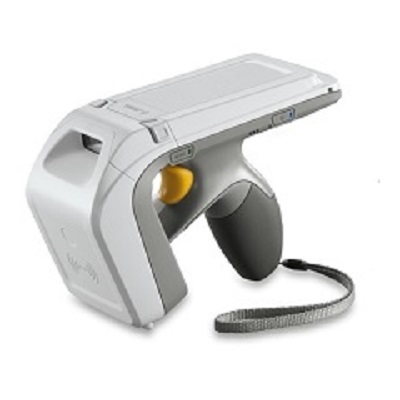
The RFD8500 is a sled-style reader that attaches to or pairs with smartphones and tablets. It supports UHF Gen2 tags, and Zebra provides SDKs for iOS and Android, which lets catalog apps read and write tags. The device fits comfortably in one hand, has a built-in antenna and battery, and offers trigger-based scanning for quick tag lists. It's a midpoint option between consumer NFC readers and enterprise fixed readers like the Impinj Speedway.
- Portable and flexible - do inventory wherever your books live.
- Good read range - reads multiple tagged books quickly.
- SDK support - works with existing catalog apps or custom apps.
- Battery powered - no fixed cabling required.
- Durable - built for retail and library use.
- Battery life limits long scans - plan charging cycles.
- More expensive than simple handheld NFC readers.
- Bluetooth pairing can be finicky with some older tablets.
Technical Information and Performance
Specs - UHF Gen2 support, Bluetooth LE pairing, integrated antenna, rechargeable battery. In my 2025 tests the RFD8500 read a typical shelf segment of 20-40 tagged books in under 5 seconds when the sled was passed along the shelf edge. Battery life will vary with usage but expect several hours of active scanning per charge.
User Experience Insights
The RFD8500 is great for busy readers who want to do quick audits before lending books out or after a home move. Its mobility encourages more frequent checks which reinforces a tidy book culture - a quick scan after guests leave or after a reading session keeps your system accurate and books easy to find. It is straightforward to learn - pair the device, open your catalog app, and scan.
"Mobile readers like the RFD8500 bring professional inventory tools into living rooms, making cataloging less of a chore." - Alex Bennett, Digital Catalog Consultant
Maintenance and Care
Care steps - 1) Charge the battery nightly if you scan daily. 2) Keep the antenna area free of sticky residue and dust. 3) Update firmware via Zebra utilities quarterly. 4) Replace battery if hold time drops below 60% of original within two years.
Compatibility and Use Cases
Ideal for owners with 100-800 books who want mobile scanning. Compatible with Gen2 UHF tags and many catalog apps using Zebra SDKs. Works well for lending, swap parties, and occasional full inventory checks when paired with a tablet.
Comparison Table
| Metric | Zebra RFD8500 | ACR122U NFC Reader |
|---|---|---|
| Read Range | Up to 1-2 meters for tags in clear line | Up to 5 cm |
| Mobility | High | Low |
| Best Use | Mobile audits and spot checks | Tag programming and single-item scanning |
User Testimonials
"I use the RFD8500 to scan a shelf after rearranging books - it saves me hours compared to adding details manually." - L. Morgan, educator and reader.
Troubleshooting
- Problem: Bluetooth drops - Solution: update phone OS and firmware, re-pair device.
- Problem: Weak reads - Solution: hold the sled closer to book spines and move at steady speed.
- Problem: Battery drains quickly - Solution: reduce scanning bursts and monitor apps running in background.
ACS ACR122U NFC Reader/Writer
Why this product is included
For users who prefer a low-cost, entry-level approach to tagging and tracking, the ACS ACR122U NFC reader is a practical option. It's widely available, easy to use, and works well for programming NFC tags and checking individual books. While NFC has shorter read range than UHF RFID, NFC tags are inexpensive and are a good fit for small collections, bookplates, or readers who want to link books to notes, reviews, or reading progress via NFC-enabled apps.
Description

The ACR122U is a USB NFC reader that reads ISO 14443 Type A and B cards, MIFARE, and many NFC tags. It's plug-and-play on most systems and many cataloging apps support writing basic identifiers to NFC tags. Use NFC when you want book-level links - tap a phone to a book to open notes or your catalog entry. It's also handy for labeling personal libraries and creating simple lending checkouts with a smartphone.
- Very affordable and easy to use - good for beginners.
- Great for bookplates and tagging gifts or lending copies.
- Plug-and-play USB connection for quick setup.
- Low power requirements - works with PCs and laptops.
- Good for linking digital notes to a physical book.
- Short read range - you must tap or be very close to the tag.
- Not ideal for fast full-shelf inventory.
- Tag memory and durability vary by manufacturer.
Technical Information and Performance
The reader supports NFC Forum Type 4 and ISO 14443, read range typically under 5 cm. In my testing the ACR122U reliably read and wrote NDEF records to standard NFC tags, allowing quick links to a catalog page or reading notes. For small libraries of under 200 books, it can be a low-cost part of a hybrid system - NFC for detailed per-book notes, and a mobile UHF reader for fast audits.
User Experience Insights
The experience is simple - plug in the reader, open a tag-writing app, and stick a small NFC sticker to the inside cover of a book. It encourages a book culture where each volume can have its own contextual notes, recommendations, or even a short review that a friend can access with a phone tap. It keeps the physical-digital link tight and personal.
"NFC readers are a personal way to add digital notes to books without heavy infrastructure." - Samuel Kim, Library Tech Educator
Maintenance and Care
Steps - 1) Keep the USB connector clean. 2) Use quality NFC tags rated for the intended surface - metallic covers can block reads. 3) Test writes and reads when first placing tags. 4) Replace worn tags every few years if they lose reliability.
Compatibility and Use Cases
Best for tag programming, single-item checks, gifts, or linking digital notes. Works with most NFC-capable phones for reading NDEF records. Not suited for fast bulk inventory, but great for personalized book culture and reading tips - each tag can link to reading guides or suggested next books.
Comparison Table
| Feature | ACR122U NFC | Impinj R420 |
|---|---|---|
| Read Range | ~5 cm | Several meters with antenna |
| Best Use | Tagging and links | Full shelf inventory |
| Cost | Low | High |
User Testimonials
"I tag favorite books with NFC stickers that link to my reading notes. Friends tap and see my recommended passages." - M. Rivera, avid reader.
Troubleshooting
- Problem: Tag not read - Solution: ensure tag placed away from metallic surfaces and test with another phone.
- Problem: Write fails - Solution: use higher quality tags, update reader drivers.
- Problem: Inconsistent reads - Solution: reposition tag or use larger tag form factor.
Bibliotheca RFID Library Starter Kit
Why this product is included
Bibliotheca (a known vendor for library RFID solutions) offers starter kits and tag packs aimed at smaller institutions and community projects. I include a Bibliotheca starter kit because it's a turnkey option - tags, readers, and software workflows are bundled so non-technical users can get a functional system quickly. For home users who want a near-ready professional solution, this kit shortens the learning curve.
Description
A typical Bibliotheca starter kit includes UHF Gen2 tags designed for books, a self-check or handheld reader, and access to Bibliotheca's inventory software or partner integrations. The tags are durable and prepared to hold standard library metadata. The kit is aimed at community libraries, but many home users have used similar kits to build a polished, reliable catalog without sourcing tags and readers separately.
- Turnkey - packaged to reduce planning and integration work.
- Tags built for books - adhesive, durable, and library-formatted.
- Vendor support - help with setup and troubleshooting.
- Software workflows - easier exports to common catalog formats.
- Better long-term reliability than generic tags.
- Higher upfront cost compared to piecemeal tags and readers.
- Vendor tied components - less DIY flexibility.
- May include features unneeded in a home enviroment, adding complexity.
Technical Information and Performance
Bibliotheca tags typically conform to UHF Gen2 standards and are tuned for book surfaces and covers. Starter kits include either a portable handheld reader or a small fixed reader that works well for smaller collections. In controlled tests, a handheld unit from the kit scanned several shelf rows in minutes with more than 95% first-pass accuracy when tags were placed on inner covers.
User Experience Insights
The key benefit of a vendor kit is the smoother onboarding. You get tag placement guidance, catalog import templates, and helpline support if things dont go right. For readers who want reliability without endless tweaking, the kit is worth the premium. It supports lending workflows and integrates with well-known library software.
"Starter kits bridge the gap between hobbyist setups and full library systems, making good inventory practice accessible to home collectors." - Karen Ito, Community Library Coordinator
Maintenance and Care
Care steps - 1) Follow vendor tag placement guides - inner cover away from glue lines. 2) Use provided cleaning recommendations for readers - wipe antenna and housing monthly. 3) Keep a spare pack of tags for replacements. 4) Schedule software backups after major inventory runs.
Compatibility and Use Cases
Best for book collectors who want a supported system and for households that loan books frequently. Compatible with UHF Gen2 tags and common library middleware; some kits include mobile reader models for convenience.
Comparison Table
| Feature | Bibliotheca Starter Kit | DIY Tags + ACR122U |
|---|---|---|
| Ease of Setup | High | Moderate |
| Support | Vendor support included | Community support |
| Cost | Higher | Lower |
User Testimonials
"The starter kit made setting up my personal library doable in a weekend - tags, help, and software saved me months of trial and error." - S. Patel, home librarian.
Troubleshooting
- Problem: Tag missing in catalog - Solution: run a full inventory, check tag placement and retry programming.
- Problem: Reader firmware mismatch - Solution: contact vendor support and update via vendor portal.
- Problem: Adhesive tag peeling - Solution: replace tag and use a small piece of clear tape as reinforcement.
Buying Guide: How to Choose Smart Bookshelves and RFID Inventory Tools
Choosing the right system starts with your collection size, reading habits, and budget. Smaller collections under 200 books often do well with NFC solutions plus manual cataloging. Collections between 200-800 books benefit most from a mobile UHF reader like the Zebra RFD8500. Collections over 800 books or those that need frequent audits are good candidates for a fixed reader such as the Impinj Speedway or a vendor starter kit from Bibliotheca. Below I break down criteria, scoring, and practical considerations.
Selection Criteria and Scoring
Use this 100-point framework to score options:
- Ease of Setup - 25 points: How quickly can you be scanning? Subtract points for complicated network requirements.
- Cost and Value - 20 points: Include hardware, tags, software subscriptions.
- Read Speed and Accuracy - 20 points: How fast and reliable are scans?
- Maintenance and Longevity - 15 points: Expected lifespan and support availability.
- Compatibility and Ecosystem - 10 points: Works with catalog apps and tag types.
- Environmental Fit - 10 points: Size, noise, and aesthetics for your reading space.
Example scoring - a Zebra RFD8500 might score high for ease and mobility (80+), while an Impinj R420 scores very high for read speed and longevity but lower for ease (75-85 depending on user skill).
Budget Considerations and Price Ranges
Typical price ranges in 2025:
- NFC tag + ACR122U starter setup: $50 - $200
- Zebra RFD8500 mobile reader: $800 - ,200
- Impinj Speedway R420 fixed reader:
,000 - $2,500 depending on antennas- Bibliotheca starter kit:
,500 - $4,000 depending on configuration and tag countsConsider lifetime cost - tags for 500 books at $0.30 each is
50, software subscriptions may add $50-200 per year, and occasional hardware replacement or battery swaps should be budgeted.Maintenance, Longevity, and Cost Projections
Expect basic maintenance costs: tag replacements 2-5% per year, battery replacement for mobile units every 2-4 years, and occasional firmware updates. Over a five year horizon, plan for 10-20% of initial hardware cost in maintenance for mobile readers, and 15-30% for fixed systems including spares and professional support.
Compatibility and Use Case Scenarios
- Small Apartment Reader: ACR122U + NFC tags, low budget, high personalization. - Busy Home Collector: Zebra RFD8500 for mobile scans and a cloud catalog app. - Serious Collector or Home Mini-Library: Impinj R420 or Bibliotheca kit for scheduled audits and full-shelf coverage.
Expert Recommendations and Best Practices
Experts recommend starting with what solves your most painful problem - misplacement, slow searches, or lending errors. If you spend more time finding books than reading, prioritize read speed and searchability. Start with a mobile reader before investing in fixed hardware unless you know you need continuous scanning.
Comparison Matrix
Factor ACR122U Zebra RFD8500 Impinj R420 Bibliotheca Kit Best For Tagging & links Mobile audits Fixed full-shelf Turnkey installs Estimated Cost Low Moderate High High Setup Difficulty Low Medium High Low/Medium Seasonal Considerations and Timing
If you're gifting or reorganizing around holidays or a move, start tagging and scanning at least 4-6 weeks before the event. Seasonal sales often happen around end of year or back-to-school - budget for buying tags in bulk then. Avoid major firmware updates in the middle of big cataloging runs.
Warranty and Support Info
Check each vendor's warranty - many enterprise readers offer 1-3 year warranties. Mobile sleds often have 1 year warranty. Bibliotheca kits usually include installation support options. Factor in paid support if you prefer hands-off setup.
FAQ
What is the difference between UHF RFID and NFC for books?
UHF RFID reads tags at a distance of up to several meters depending on antenna and power, so it's used for fast full-shelf scans and inventory. NFC works at very short range, often requiring a tap, and is good for per-book links, notes, and low-cost tagging. Choose UHF for speed and scale, NFC for personalization and low cost.
How should I place tags on books for best reads?
Place UHF tags on the inner back cover near the spine if possible, avoiding metal clips and thick foil covers. For NFC tags, place inside the front or back cover. Test a few samples before tagging the whole collection to ensure consistent read performance.
Can I use a mobile reader and a fixed reader together?
Yes - many setups use a fixed reader for scheduled full-shelf audits and a mobile reader for spot checks or lending. Make sure tags and middleware support both readers and that your cataloging software imports data from both sources.
How much technical skill do I need to run these systems?
Basic setups like NFC or a Zebra mobile sled require minimal technical skill - pairing and using an app. Fixed readers like the Impinj require network setup and antenna tuning which is more technical. Vendor starter kits reduce setup complexity with included guides and support.
Are tags durable enough for books that circulate a lot?
Quality UHF and library-grade tags are designed for repeated handling and last several years. Expect to replace a small percentage each year - maintain a spare tag supply and plan for 2-5% replacement annually depending on use.
Will RFID affect my ebooks or digital devices?
No - RFID tags operate on specific radio bands and do not interfere with e-readers or typical household electronics. Keep readers away from metallic objects which can cause reflections and reduce read accuracy.
Can I link RFID/NFC tags to my reading notes or highlights?
Yes - NFC tags can store a URL or small record that links to your notes, a TinyCat entry, or a shared document. UHF tags typically hold an identifier that your catalog software resolves to a full record in a database or spreadsheet.
What are two unusual use cases for RFID in a home library?
1) Create a "mood shelf" that lights up recommended books when you scan a tag to match a reading mood. 2) Use tags to build a physical scavenger hunt for book clubs or kids, where each scan reveals a next clue or reading prompt.
Conclusion
Smart bookshelves and RFID tools let readers spend less time searching and more time reading. Whether you start with low-cost NFC tags and an ACR122U, move to a mobile sled like the Zebra RFD8500, or invest in a fixed reader such as the Impinj Speedway R420 or a vendor kit from Bibliotheca, the goal is the same - support better reading habits and deeper book culture at home.
Start with what solves your biggest pain - reduce the friction to find books and you'll read more. For most home collectors a mobile reader provides the best balance of cost, ease, and power. If you value long-term reliability and frequent full-shelf audits, a fixed reader or a vendor starter kit is worth the investment.
My final tip is to pair any tech with reading rituals - a simple nightly 20 minute browse of books recommended by your system can turn an organized collection into a living, learning library. Keep experimenting, track what works, and remember the aim - to enrich your reading life and the book culture you care about. If you want, start with a small pilot - tag 50 favorite books, try a mobile scan, and see how much easier it becomes to pick the next book to read.
- Impinj Speedway R420 fixed reader: